

Mumbai (Maharashtra) [India], February 24: Surgeons across India are experiencing an increase in difficult hernia operations which primarily occurs because of rising obesity rates. Medical experts now warn that excess body weight not only increases the risk of developing hernias but also complicates their treatment, recovery, and long-term outcomes. The current trend has started to draw attention to the strong relationship which exists between obesity and hernia development.
Bariatric and laparoscopic surgery specialists report that abdominal wall hernias which include umbilical hernias and incisional hernias and ventral hernias now occur more frequently among patients who have excess weight. The constant pressure which the excess fat applies to the abdominal wall causes muscle weakness under the pressure, which results in abdominal wall bulging and ruptures. In obese patients, hernias also tend to be larger, recurrent, and more difficult to repair successfully.
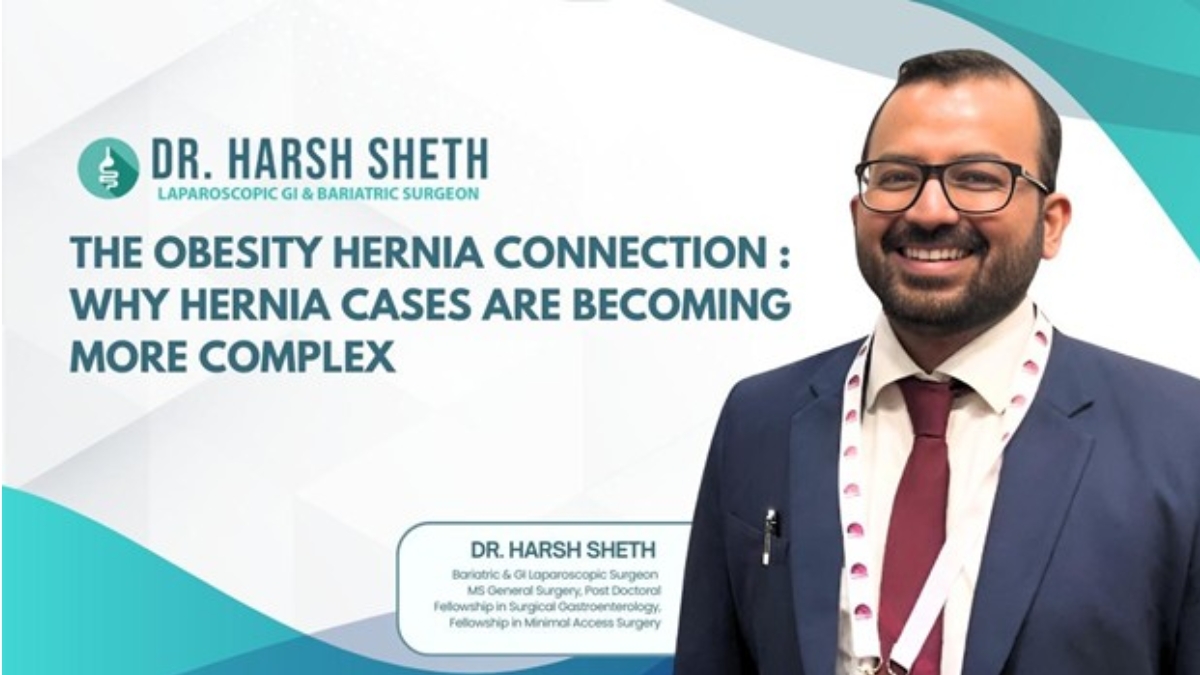
Dr. Harsh Sheth, the foremost Bariatric and Laparoscopic Surgeon in Mumbai, states that obesity causes two different effects which lead to hernias. The extra body weight creates elevated abdominal pressure, which results in abdominal wall damage. Modern surgeons encounter their greatest obstacle when they need to perform hernia surgery on patients who have diabetes and high blood pressure and fatty liver disease. The medical conditions of patients create two problems during surgery because they raise danger levels and create obstacles to optimal healing post surgery. The surgical treatment of hernias for obese patients demands specialized knowledge and advanced medical techniques in addition to a cooperative effort between various medical teams.
Literature studies indicate patients who suffer from obesity face a higher risk of developing surgical complications, which include both wound infections, mesh problems and recurrences following their standard hernia operations. The surgical community has started to prefer minimally invasive methods which use laparoscopic and robotic hernia surgeries because these techniques decrease surgical damage and lead to better patient recovery results.
“Minimally invasive hernia surgery has transformed the way we treat obese patients,” says Dr. Sheth. “Smaller incisions mean less pain, faster healing, and lower infection rates. However, long-term success still depends on addressing obesity as an underlying cause.”
Another emerging trend is the increasing number of patients who develop hernias which keep coming back after they have undergone earlier open surgical procedures. People with obesity have a much higher chance of experiencing recurrence which makes their subsequent operations more complicated and demanding than regular procedures. The surgical community now engages in discussions about how doctors should manage obesity before performing hernia surgery.
Surgeons in specific situations now use a combination of bariatric and hernia surgery which allows them to perform weight-loss surgery and hernia repair either simultaneously in a staged manner. The method intends to decrease total surgical hazards while enhancing results that persist over time. Patients who undergo bariatric surgery experience weight reduction which creates lower abdominal wall tension and enhances their metabolic system while decreasing the likelihood of developing hernias again.
Dr. Sheth points out that patient knowledge plays a vital role in hernia treatment. The absence of initial pain from swelling makes people postpone their hernia treatment. The delays in hernia treatment due to obesity may lead to dangerous bowel obstruction and strangulation. The emergency situation occurs due to either a lack of early detection or postponing surgical evaluation.
Experts state that hernia repair represents only one component of a complete health program which requires patients to control their weight and adopt new habits while receiving ongoing medical supervision.
Awareness about the connection between obesity and hernias will allow patients to make better medical choices. Patients who lose weight before or after hernia surgery experience better surgical results and better life quality. Medical professionals now recommend that patients use long-term weight loss methods such as medical nutrition therapy and supervised exercise, or pharmacotherpay, or bariatric surgery when it is needed.
As awareness grows, medical professionals hope that more patients will seek early consultation and holistic treatment rather than delaying care. “The goal is not just to repair a hernia, but to prevent it from coming back,” says Dr. Sheth. “Addressing obesity is central to achieving that goal.”
The management of hernia in obese patients demonstrates rapid progress through current developments in minimally invasive surgical techniques and increased research focus on metabolic health. Experts predict that the future of hernia treatment in India will depend on an integrated approach that combines surgical skills with weight management solutions.
Dr. Harsh Sheth
Website: https://drharshsheth.com/
Address: Genese Clinic, G-14/15 8th Floor, Everest Building, Tardeo Rd, Janata Nagar, Tardeo, Mumbai, Maharashtra 400034
E-Mail id: sethharsh903@gmail.com
If you object to the content of this press release, please notify us at pr.error.rectification@gmail.com. We will respond and rectify the situation within 24 hours.
