

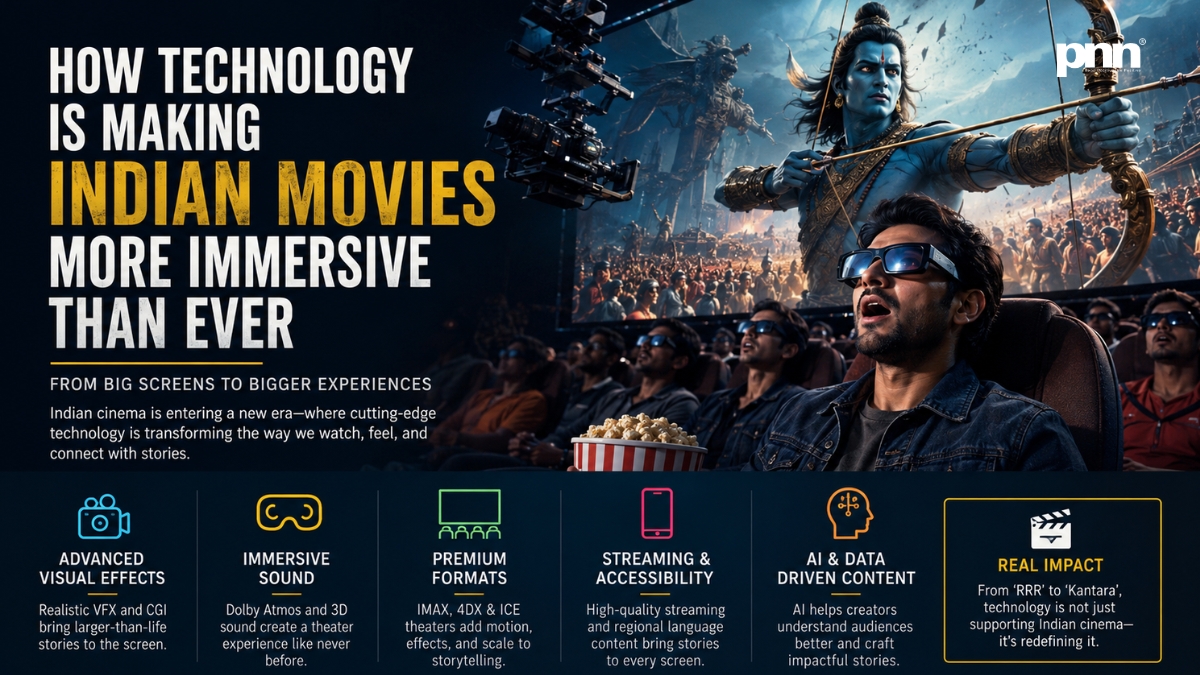
Mumbai (Maharashtra) [India], July 24: There was a time when catching a movie in India meant squeezing into a single-screen theater with a creaky ceiling fan and scratchy audio coming from old speakers shoved wherever they’d fit. Fast forward to today, and you’ll find teens in Kochi walking into theaters where a helicopter seems to whir past their heads, or battle scenes spill off the edge of a massive screen. This transformation didn’t just happen on its own. A decade of steady—and pretty pricey—tech investments has completely changed what it means to watch an Indian film.
The screens got bigger and so did everyone’s vision
IMAX used to be a rare treat here, mostly rolled out for giant Hollywood releases. That’s changed. Movies like Baahubali 2: The Conclusion swung big, shooting with the IMAX experience in mind to match their epic storylines. Filmmakers aren’t just squeezing their movies onto big screens after the fact anymore—they’re planning with those huge frames in mind right from the start. Take Nitesh Tiwari’s Ramayana Part 1, coming this Diwali. It’s filmed specifically for IMAX, using that tall 1.90:1 format, and SS Rajamouli’s next movie with Mahesh Babu is following a similar path. Directors are shaping whole sequences around what a massive, immersive screen can do.
Of course, you need places to show off that ambition. The theater business has been hustling to keep up, and now India’s got about three dozen IMAX screens spread across most states. Andhra Pradesh and Telangana haven’t gotten theirs yet, but that hasn’t gone unnoticed—just look at Sullurpeta in Andhra Pradesh. It’s home to the country’s biggest cinema screen, nearly 100 feet wide, showing that even outside Mumbai and Delhi, people are hungry for bigger and better.
It’s not just the visuals—the sound has leveled up in a big way
Crisp images grab headlines, but what really wows most moviegoers is audio. Dolby Cinema came to India with a handful of savvy exhibitors, like City Pride in Pune and Allu Cineplex in Hyderabad. Now it’s expanded to cities like Bengaluru, too. Marrying Dolby Vision’s jaw-dropping brightness and color with Dolby Atmos’s ability to send sound swirling around and above you, Indian blockbusters like Kantara, War 2, and Pushpa: The Rule – Part 2 absolutely come alive. Sit through a drum-heavy sequence in Kantara on an Atmos system and you get it—those beats seem to drop from above, changing how the whole scene feels.
Behind the scenes, VFX studios have seriously stepped up
Even a generation ago, Indian movie effects were usually limited to clumsy compositing or awkward wire removal—something everyone just sort of forgave. Not anymore. Studios like Chennai’s top shops, plus international players like DNEG, are cranking out work that stands tall beside Hollywood’s best. That’s important, because VFX is now woven into the fabric of Indian storytelling. It’s not just for show—it’s there to build entire mythological worlds, pull off wild action, or even age actors down for flashbacks. This used to mean expensive outsourcing, but not anymore.
And then there’s how filmmakers are actually capturing all these new looks
These days, mention a big Telugu or Hindi production, and drone cinematography is on the table right away. Sweeping aerial shots once required helicopters, permits, and deep pockets. Now? A skilled drone pilot and a nimble camera do the trick—even for mid-range movies. Plus, Indian crews are tapping into LED-volume virtual production—the same technology you see in top-notch sci-fi abroad. Instead of actors stumbling through green screens and weird lighting, they perform inside fully rendered digital sets right there on stage. The difference is easy to spot.
But why does any of this matter to moviegoers?
It’s tempting to view this as just another industry arms race for the biggest box office weekend. In reality, there’s more at stake. With streaming so easy, theaters need to offer fans something you simply can’t get at home. Enveloping sound and true big-screen magic are real reasons to head out. Sure, a rom-com doesn’t need all this flash. But mythic tales, full-on war sagas, or rain-soaked thrillers? They demand it, and Indian directors clearly know the difference.
Maybe the best part is how this shift is spreading out, not just sticking to the same old Mumbai or Bengaluru strongholds. Cities like Trichy and Kochi now have IMAX and Dolby, so that wild, immersive experience is reaching far more people. That growing access to spectacle might end up being the most important shift of all.
Indian movies have always gone all-in on drama and spectacle. What’s new is that the technology finally does justice to the dreams.
