

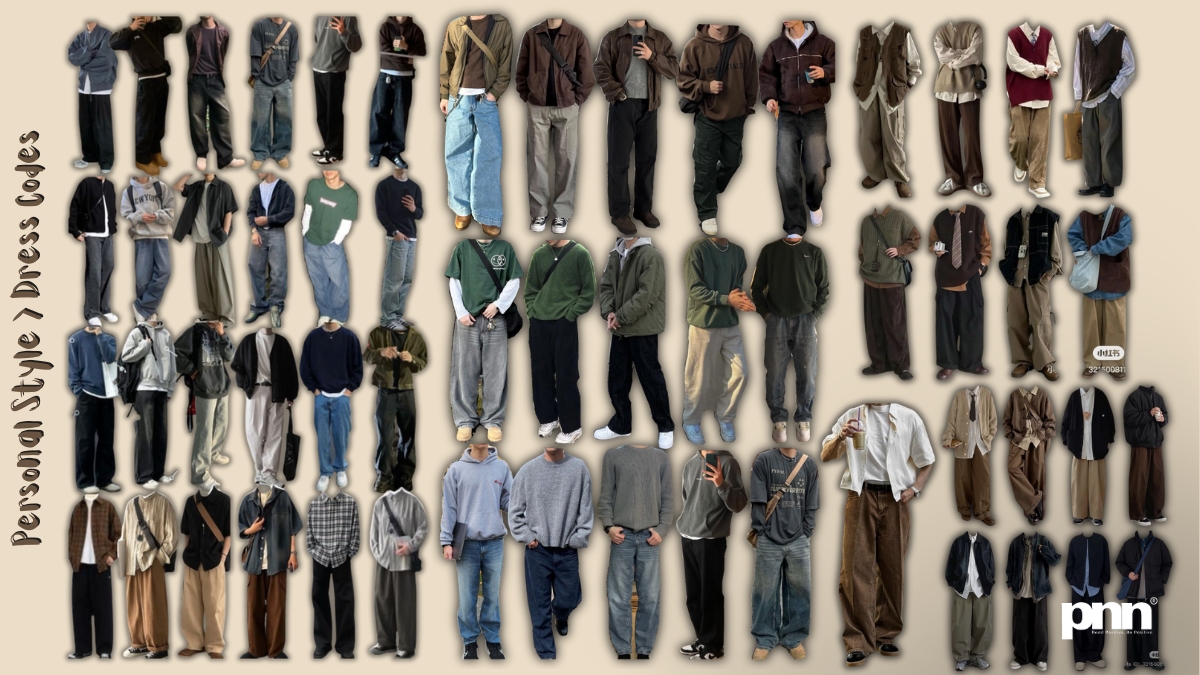
Menswear didn’t collapse in 2026. It simply stopped asking for permission.
Somewhere between oversized knits, thrifted denim, pearl necklaces worn without irony, and shoes that look like they were chosen for comfort rather than approval, Gen Z men have decided something radical: fashion is not a rulebook, it’s a language. And languages evolve when people start speaking honestly.
This shift didn’t announce itself with a manifesto or a runway rebellion. It arrived subtly — in metro stations, cafés, college campuses, startup offices, music gigs, and Instagram feeds that look less curated and more confessional. The result? A generation of men dressing for meaning, not masculinity audits.
And yes, it’s refreshing. It’s also messy. Which is exactly the point.
The End Of The “Dress Like A Man” Era
For decades, menswear operated on a narrow bandwidth. Neutral colours. Safe silhouettes. Minimal deviation. Style advice often boiled down to don’t stand out — unless you’re rich enough for it to look intentional.
Gen Z men, raised on digital multiplicity and algorithmic chaos, find that logic laughable.
In 2026, the phrase “dress like a man” sounds less like advice and more like a vague threat. Why should clothing reinforce a gender script when identity itself feels fluid, contextual, and personal?
This generation grew up watching influencers wear skirts one day and cargo pants the next, artists blur genre boundaries, and creators monetize individuality rather than conformity. Fashion, naturally, followed suit.
Comfort Isn’t Lazy, It’s Political
One of the loudest statements Gen Z men are making is also the quietest: they choose comfort unapologetically.
Loose trousers. Boxy shirts. Soft fabrics. Sneakers that prioritize feet over flex. This isn’t about sloppiness — it’s a rejection of performative discomfort once mistaken for discipline or power.
In a post-pandemic world where work-from-anywhere is normalized and burnout is a shared cultural diagnosis, clothing that restricts movement feels… outdated. Why suffer for aesthetics when the world is already exhausting?
Brands have noticed. The global menswear market crossed $575 billion in 2025, with comfort-led segments — athleisure, hybrid tailoring, relaxed silhouettes — accounting for a growing share of revenue. Not a coincidence. Just capitalism following psychology.
Vintage Is The New Luxury (And New Isn’t Impressive Anymore)
Gen Z men don’t chase “new.” They chase stories.
Vintage jackets, thrifted denim, hand-me-down watches, customised sneakers — these items carry narrative weight. They signal individuality, sustainability, and cultural awareness without saying a word.
Fast fashion still exists, but it no longer impresses by default. Wearing something rare, reused, or reinterpreted now communicates discernment — a subtle flex that doesn’t scream for attention.
Secondhand fashion platforms and resale culture have grown into a multi-billion-dollar economy, with men under 30 driving much of the demand. Not because it’s cheaper (sometimes it isn’t), but because originality has replaced exclusivity as the new status symbol.
Colour Is Back, And It’s Not Asking Permission
Beige had a good run. So did black, grey, and navy pretending to be “timeless.”
In 2026, Gen Z men are bringing colour back into menswear — unapologetically and without explanation. Lavender knits. Emerald trousers. Burnt orange jackets. Even pink, still controversial for reasons no one remembers clearly, is worn casually.
Colour isn’t about flamboyance here. It’s about emotional expression. Mood dressing. Contextual styling.
It turns out when masculinity stops being fragile, it stops fearing colour.
Personal Styling Over Seasonal Trends
One of the most disruptive shifts is this: Gen Z men don’t care what’s “in” this season.
They care about what feels aligned.
Instead of following trend cycles dictated by fashion calendars, many curate personal uniforms that evolve slowly. A specific silhouette. A consistent colour palette. Accessories that feel almost ritualistic.
This makes traditional trend forecasting uncomfortable. How do you sell “must-have” items to a generation that prefers meaning over momentum?
Some brands are adapting by offering customization, modular wardrobes, and narrative-driven collections. Others are struggling — stuck selling relevance to consumers who aren’t interested in being told who to be.
Accessories Are No Longer Gendered (Finally)
Earrings. Rings. Necklaces. Bags. Scarves. Nail polish.
None of these register as statements anymore. They’re just choices.
Gen Z men treat accessories as punctuation marks — subtle ways to finish a sentence, not scream a paragraph. The stigma once attached to “feminine” items has eroded, replaced by indifference.
This shift is quietly radical. It decouples adornment from identity anxiety and allows style to function as play rather than proof.
The Influence Economy Helped — And Hurt
Social media played a crucial role in democratizing menswear. Anyone with a phone and taste could become a reference point. Algorithms rewarded uniqueness. Communities formed around niches rather than norms.
But there’s a downside.
The pressure to be visibly original can turn authenticity into performance. When everyone is expressing themselves, self-expression itself risks becoming aestheticized — another metric to measure worth.
Some Gen Z men report fatigue from constant visual documentation. Outfit-check culture can slide into self-surveillance. Individuality, when monetized, still obeys algorithms.
Freedom is real — but not frictionless.
Cultural Pushback Is Still Alive
Let’s be honest: not everyone is applauding.
Traditionalists accuse Gen Z men of abandoning masculinity. Comment sections still erupt when skirts appear in menswear campaigns. Workplaces haven’t fully caught up. Family gatherings remain… educational.
Fashion may be changing faster than social acceptance. And that tension is real.
But every cultural shift begins this way — not with unanimous approval, but with visible resistance.
Why This Matters Beyond Clothes
This isn’t really about fashion.
It’s about autonomy.
Gen Z men are using clothing to reclaim authorship over identity — refusing scripts that no longer reflect lived reality. They’re rejecting inherited expectations without replacing them with rigid alternatives.
Fashion has become a low-risk testing ground for higher-stakes questions:
Who am I without tradition?
What do I keep?
What do I discard?
That’s not rebellion for attention. That’s evolution.
The Future: Messy, Honest, Unfinished
Menswear in 2026 isn’t cleaner or more polished. It’s layered, contradictory, unfinished.
And that’s okay.
Because the goal was never perfection. It was permission.
Permission to dress without explanation.
Permission to change.
Permission to be inconsistent.
If that unsettles some people, good. Growth usually does.
